Co-op isn’t what it used to be. If your tried-and-true teamwork tactics suddenly feel ineffective, you’re not imagining it—modern multiplayer design has quietly rewritten the rules. This guide explores the most important cooperative gameplay trends shaping today’s breakout titles, from role interdependence systems to adaptive enemy AI that punishes outdated coordination styles. Many teams struggle not because they lack communication, but because the mechanics themselves demand new strategic thinking. Drawing on extensive hands-on analysis across 2024’s biggest co-op releases, we break down what actually works right now—so you can adapt fast, play smarter, and win more consistently in your next session.
Forced Dependency: The Rise of Asymmetrical Co-op
There’s a noticeable shift in cooperative gameplay trends: teams are no longer built around four interchangeable heroes. Instead, we’re seeing forced dependency—a design philosophy where each player fills a highly specialized role, and victory collapses if even one link in the chain fails. In simple terms, asymmetrical co-op means players have different abilities, responsibilities, and information, not just different skins.
Some critics argue this design is restrictive. Why limit player freedom? Why not let everyone be equally capable? It’s a fair concern. After all, traditional co-op lets you recover from mistakes more easily. But that safety net often dilutes tension. When everyone can do everything, no one feels essential.
Technique: Role Mastery Over Generalization
In games like Lethal Company, the “Terminal Guy” isn’t optional—he’s mission control. Role mastery means obsessively refining one critical function instead of spreading skills thin. (Think of it like being the drummer in a band—no one notices until you stop.)
Strategy: Resource Funneling
Rather than equal distribution, teams practice resource funneling—prioritizing the most pivotal role in the moment. Protect the pilot. Feed intel to the puzzle-solver. Allocate tools strategically. Pro tip: identify the current bottleneck before handing out gear.
Examples in Action
In Lovers in a Dangerous Spacetime, the pilot and weapons operator must constantly swap and communicate—pure chaos without coordination. It Takes Two doubles down, designing puzzles that demand synchronized, complementary abilities. It’s less “Avengers assemble” and more “Ocean’s Eleven precision”—every specialist matters, or the plan falls apart.
Emergent Narratives: When Player Choice Dictates the Battlefield
Defining the Trend
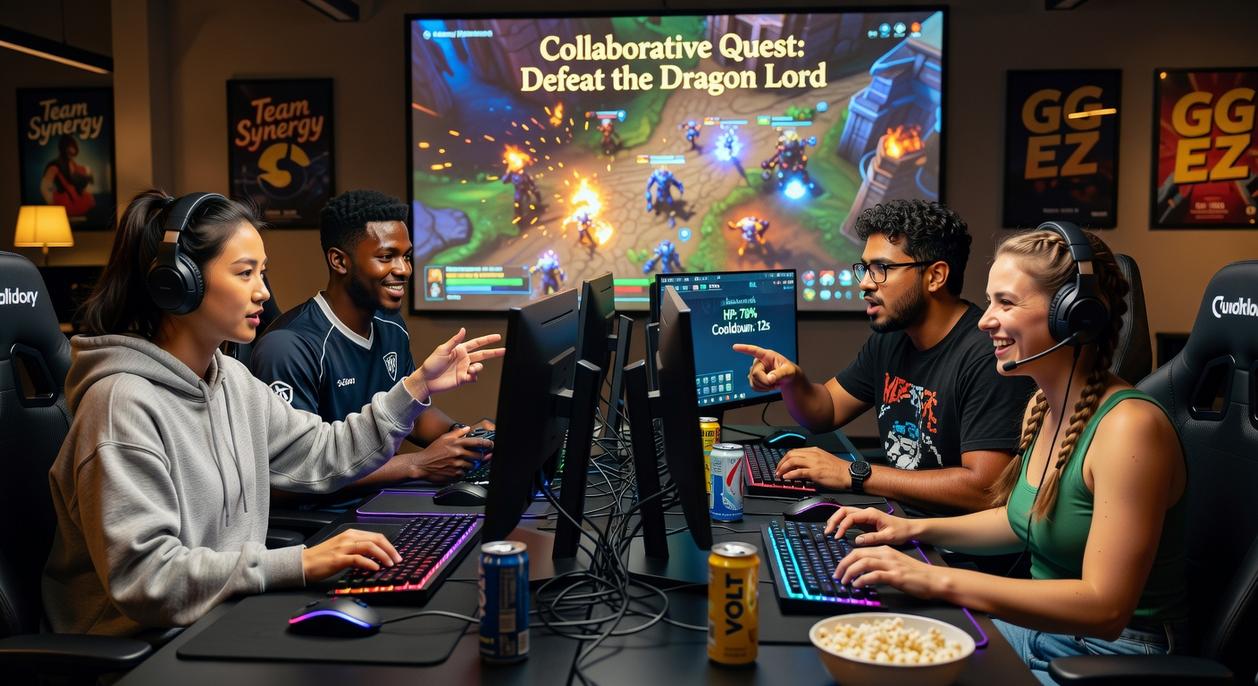
Emergent narratives flip the traditional “follow the waypoint” formula on its head. The mission becomes a loose framework, while moment‑to‑moment decisions belong entirely to players. In other words, the battlefield isn’t scripted—it’s negotiated in real time. Think less theme park ride, more jazz improvisation (with explosions).
What’s in it for you? Total agency. Instead of memorizing optimal paths, you develop adaptive thinking, faster reaction times, and tighter squad synergy—skills that transfer across genres.
Technique – The Strategic Ping
Advanced ping systems in Helldivers 2 and Apex Legends redefine non‑verbal coordination. A “ping” is a contextual marker—enemy here, loot there, defend this—that replaces cluttered voice chat. Under pressure, silence is speed.
Pro tip: Assign emotional meaning to pings within your squad (urgent spam vs. single calm mark). It reduces hesitation by seconds—which matters.
Strategy – Macro-Level Objective Setting
Zoom out. Winning squads think like battlefield economists, allocating attention as a scarce resource. In Helldivers 2’s Galactic War, ignoring a distant front can collapse the whole campaign. The benefit? You build strategic foresight rather than tunnel vision.
| Skill Developed | In-Game Impact | Long-Term Benefit |
|—————–|—————|——————|
| Map Awareness | Fewer ambushes | Faster decision-making |
| Resource Allocation | Sustained pressure | Strategic planning skills |
| Silent Coordination | Cleaner engagements | Team leadership growth |
Examples in Action
In Baldur’s Gate 3, players stack crates, shove bosses off cliffs, or accidentally ignite entire rooms. Developers provide systems—not solutions. That unpredictability fuels replayability and deeper engagement.
Some argue scripted encounters ensure balance. Fair. But cooperative gameplay trends show players increasingly value creativity over control. When you dictate the battlefield, every victory feels earned—not prepackaged.
The Social Sandbox: Blurring Lines Between Co-op and Community
The Social Sandbox is a shift from mission-based multiplayer to persistent, shared worlds where progress never really resets. Instead of logging in for a single objective, players contribute to an evolving ecosystem—part survival camp, part digital neighborhood (think Minecraft meets a long-running D&D campaign).
At the heart of this trend is Asynchronous Cooperation—the ability to contribute to a shared goal without being online at the same time. In practical terms, that means building defenses, farming materials, or crafting tools that benefit your group hours later. Research on cooperative play shows shared goal structures increase long-term engagement and social bonding (Entertainment Software Association, 2023).
So what should you do if you’re diving into games like Valheim or Palworld? Start with Task-Based Delegation. Assign long-term roles—farmer, builder, explorer—to reduce friction and avoid duplicated effort. This mirrors real-world team efficiency models, where defined roles improve productivity (Harvard Business Review, 2016).
Admittedly, some players argue strict roles limit freedom. That’s fair. However, light structure actually enhances creativity by removing chaos (and chaos burns out servers fast).
If you enjoy structured progression, you might also explore how ranking logic shapes multiplayer motivation in competitive ranking systems explained for new players: https://civiliden.com/competitive-ranking-systems-explained-for-new-players/
Ultimately, cooperative gameplay trends favor players who plan ahead. Pro tip: establish shared storage rules early—future you will be grateful.
AI-Driven Dynamics: The Unpredictable Third Party
At first glance, AI “Game Masters” might seem unfair—an invisible hand stacking the deck. However, that unpredictability is exactly where the advantage lies. An AI Director (a system that dynamically adjusts difficulty based on player performance) creates reactive battlefields that reward awareness over brute force.
Take Left 4 Dead or Darktide. The calm before a swarm isn’t random—it’s Pacing Awareness in action. Teams that recognize these AI-driven lulls reload, heal, and reposition early (not when the music spikes). As a result, they control momentum instead of scrambling.
Better yet, understanding what triggers pressure spikes lets you manipulate spawns—intentionally slowing progress to create breathing room or funneling enemies into tight corridors. In today’s cooperative gameplay trends, mastering the system means fewer wipes, cleaner runs, and smarter victories.
Your Next Cooperative Victory
You came here to understand how modern co-op has transformed—and now you see how cooperative gameplay trends have shifted from simple teamwork to layered strategy built on role dependency and long-term synergy. Ignoring that evolution is exactly why so many teams stall, clash, and lose momentum.
The fix is clear: embrace asymmetrical roles, sharpen non-verbal communication, and think beyond the moment-to-moment play. That’s how good squads become unstoppable ones.
Don’t just read about it—apply it. In your very next session, test “Resource Funneling” or “Asynchronous Cooperation” deliberately. Track the difference. Thousands of competitive players already use these optimization tactics to win more consistently—now it’s your move. Queue up and execute with intention.