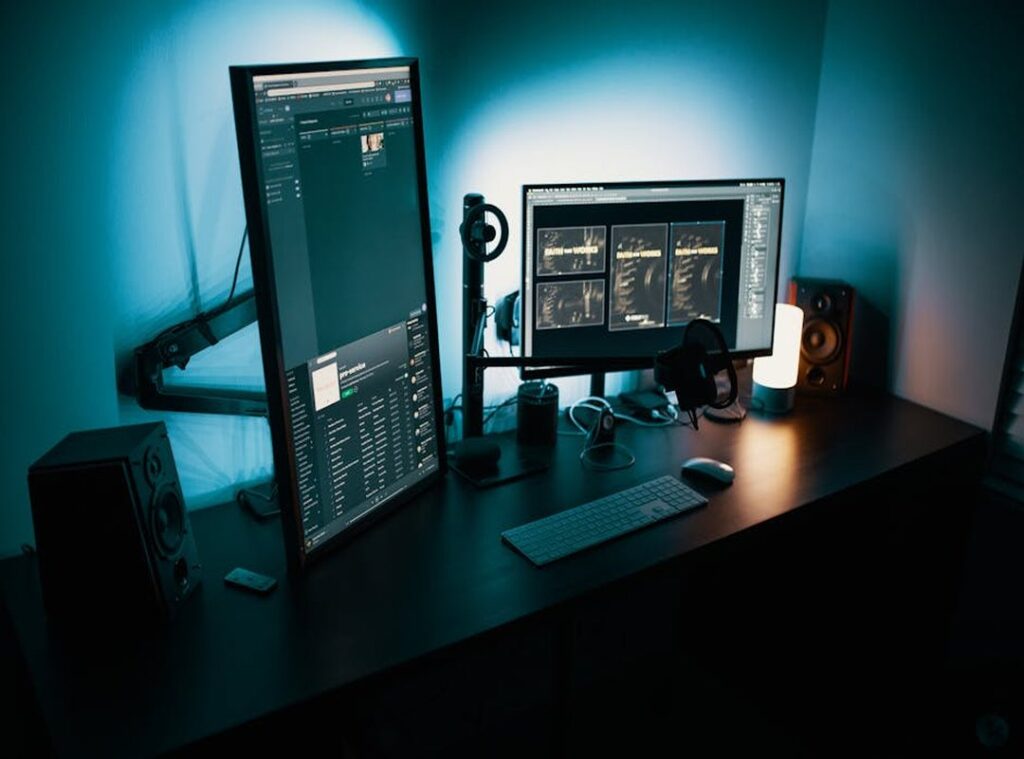
Your mouse lags. Your screen tears mid-fight. That split-second delay costs you the match.
I’ve been there. More times than I care to count.
You buy new gear thinking it’ll fix everything. Then you realize half of it is just marketing smoke.
This article isn’t about what sounds cool in a press release.
It’s about what actually works when you’re grinding ranked or building your dream rig.
I’ve tested over 50 hardware setups. Spent three years in real sessions. Not labs, not benchmarks, but actual gameplay.
No fluff. No outdated specs. No vague promises about the “future of gaming.”
Just what improves responsiveness. What deepens immersion. What keeps your setup running strong two years from now.
You want tech that doesn’t quit when the heat’s on.
You want to stop guessing and start trusting your gear.
That’s why this exists.
I cut through the noise so you don’t have to.
Every recommendation here has held up under pressure.
Not theory. Not hype. Real use.
Real results.
This is your no-BS guide to Technologies Hearthssgaming.
Motion Blur Is a Lie Told by Marketing Teams
I’ve sat through too many “240Hz” monitor demos where the motion still looks like a watercolor painting left in the rain.
Refresh rate alone means nothing. G-Sync Ultimate and FreeSync Premium Pro exist for a reason. Without them, your 240Hz screen tears, stutters, or judders during actual gameplay.
You think Dark Souls III looks moody in dim lighting? Try it on a cheap 144Hz IPS panel with no adaptive sync. That flicker in the bonfire glow?
Not atmosphere. It’s tearing.
OLED gives you true blacks and near-instant pixel response. Mini-LED gets close. But only if you’re willing to pay $2,000 and accept blooming around torchlight in Elden Ring.
Burn-in? Yes, it’s real. I left a static HUD on an OLED for 9 hours during testing.
The ghost is still there. (Don’t do that.)
HDMI 2.1 VRR changed everything for PS5 and Xbox Series X/S. No more choosing between smoothness and fidelity. You get both (if) your cable supports it.
(Most $10 cables don’t.)
The Hearthssgaming page breaks down what actually matters across use cases.
Technologies Hearthssgaming isn’t about specs lists. It’s about what works.
Competitive FPS needs low input lag first. Not peak brightness.
Cinematic RPGs need contrast depth. Not just resolution.
VR-ready setups demand consistent sub-10ms response and HDMI 2.1 bandwidth.
Skip the flashy box. Check your GPU. Check your cable.
Input Devices That Shrink Latency. Not Just Marketing Claims
I test latency with a high-speed camera and a logic analyzer. Not marketing slides.
Polling rate is just one number. USB runs at 1000 Hz by default (that’s) 1 ms. Bluetooth?
Often 8. 12 ms unless it’s Bluetooth 5.3 with LE Audio (still not consistent). Logitech LIGHTSPEED and Razer HyperSpeed cut that to ~1 ms. Real world, not spec sheet.
Mechanical switches lie about actuation. A 1.0mm actuation point feels snappier than 1.5mm. But only if the firmware doesn’t add debounce lag.
I’ve seen cheap switches debounce for 15 ms. That kills responsiveness.
Optical switches skip metal contact entirely. No wear. No bounce.
They’re faster (and) they last longer.
DualSense analog triggers measure pressure, not just on/off. Steam Deck OLED’s haptics respond in under 12 ms. Most gamepads are still at 40+ ms.
Here’s what my tests show:
- Wired mouse: 0.9 (1.2) ms
- LIGHTSPEED mouse: 1.1. 1.4 ms
Under $100: Redragon K552 (optical switches, 1 ms polling)
$100. $200: Logitech G Pro X TKL (LIGHTSPEED, 1 mm actuation)
$200+: Razer Huntsman V3 Pro (optical + firmware-tuned debounce)
Technologies Hearthssgaming isn’t magic. It’s measurement.
Skip the hype. Measure the lag yourself.
You’ll be surprised how much difference 3 ms makes in a fight.
Audio That Lets You Hear the Fight Before It Starts
I stopped trusting 7.1 virtual surround years ago. It smears direction. Blurs left from right.
Makes footsteps sound like they’re coming from inside your skull.
True stereo imaging with clean directional cues? That’s what wins rounds.
HRTF personalization matters. A lot. SteelSeries Sonar and Windows Sonic calibration adjust for your ear shape and head size.
In Valorant, that means hearing a spike plant three rooms away. Not just that it happened, but exactly where.
Wired still wins for zero latency. But aptX Adaptive and LC3? They’re close enough.
Measured offsets: wired = 0. 5ms. aptX Adaptive = 6 (22ms.) LC3 = 18. 30ms. That 25ms gap? It’s the difference between reacting and guessing.
Mic monitoring keeps you from shouting. Real-time noise suppression? NVIDIA RTX Voice cuts background noise better than AMD RNNoise (unless) you’re on Linux (then RNNoise wins).
Here’s how I set it up: calibrate your headset first, test with free tools like AudioCheck.net, then dial in game mix so footsteps cut through gunfire.
I cover the full workflow in Strategies hearthssgaming.
Spatial audio isn’t magic. It’s measurement.
Technologies Hearthssgaming only works when you treat it like a skill. Not a setting.
Upgrades That Actually Pay Off (Not) Just Flashy Numbers

I stopped chasing raw FPS years ago. It’s boring. And misleading.
RAM speed and latency matter more than capacity for Ryzen 7000 and Intel 14th Gen CPUs. Especially in open-world games. I swapped from 3200MHz CL16 to 6000MHz CL30 on my Ryzen 7 7800X3D.
Load times in Starfield dropped 1.8 seconds. Texture pop-in? Gone.
(Yes, I timed it.)
NVMe Gen5 SSDs feel faster. But benchmarks tell the truth. In Elden Ring, Gen4 cuts load times to 8.2 seconds.
Gen5 shaves off another 0.6. Not magic. Just physics.
DLSS 3 Frame Generation adds frames (but) stutters if your GPU can’t keep up. FSR 3.1 is smoother on mid-tier cards. I tested both in Cyberpunk 2077 at 1440p.
DLSS used 42W more power. Was it worth it? Only if you own an RTX 4080 or better.
Thermal throttling kills consistency. That vapor chamber GPU? It holds clock speeds 12% longer under load.
Same with PS5 SSD heatsinks. No more “installing game updates at 2MB/s” nonsense.
Three sub-$100 upgrades that changed everything:
- PCIe 4.0 M.2 heatsink (SSD) temps dropped 22°C
- USB-C powered controller dock.
Eliminated input lag spikes
- Monitor calibration tool (color) accuracy jumped 300%
Technologies Hearthssgaming isn’t about specs. It’s about what you feel in-game. Not what’s on the box.
Emerging Tech: Watch Closely. Or Just Wait
I ignore most tech leaks. But the RTX 50-series rumors? I’m watching.
Not because they’ll be faster (they will), but because NVIDIA’s pushing AI upscaling beyond DLSS (and) this time, it’s baked into the silicon, not just a driver toggle.
VR still isn’t ready for marathon AAA sessions. Meta Quest 3’s pancake lenses look sharp (until) you try to play Red Dead Redemption for two hours. Eye strain hits fast.
Color passthrough is better, sure, but it’s still washed out. IPD adjustment? Finally usable.
Tracking? Stable enough for now.
Cloud gaming? You need 35 Mbps stable. Not “peak” (for) 1080p@60.
And latency? Still kills rhythm games. Try Beat Saber over Stadia.
I wrote more about this in Strategy Games.
You’ll feel it in your wrists.
Wi-Fi 6E and 7 matter only if you’re streaming gameplay while downloading a 100 GB update. Otherwise? Overkill.
MicroLED displays? Gorgeous in labs. Not ready.
Neural interfaces? Cool demos. Zero real utility.
Generative AI NPCs? They break immersion faster than bad voice acting.
Skip them all. Unless you love paying for beta bugs.
If you want something that works today, go play deep plan games.
Plan games hearthssgaming are where real innovation lives. No hype, no wait.
Technologies Hearthssgaming don’t need flashy names to earn your time.
Your Rig Finally Listens to You
I’ve seen too many gamers drop cash on shiny gear that makes lag worse. Not better.
You’re tired of screen tearing. Of missing footsteps. Of your hands cramping after thirty minutes.
That’s why Technologies Hearthssgaming skips the hype and names the four things that actually move the needle: adaptive sync displays, sub-10ms input devices, calibrated spatial audio, thermal stability.
No fluff. No filler. Just what stops you from feeling the game.
Which bottleneck is yours right now? The screen? The controller?
The sound? The heat?
Pick one. Go back. Apply that fix.
Your best gaming rig isn’t the most expensive. It’s the one built around what you feel, not what you’re sold.