
Staying ahead in today’s fast-moving gaming landscape isn’t easy. New patches drop overnight, multiplayer metas shift without warning, and what worked last week can suddenly feel obsolete. If you’re here, you’re likely looking for clear, up-to-date insights that cut through the noise—whether that’s understanding emerging game trends, adapting to multiplayer evolution, or fine-tuning your performance with smarter optimization strategies.
This article is built to do exactly that. We break down what’s changing, why it matters, and how it affects your gameplay experience in practical terms. From patch impact analysis to mechanical game balance considerations, every section is designed to help you make informed decisions in real matches—not just theorycraft in menus.
Our insights are grounded in hands-on testing, close monitoring of developer updates, and deep analysis of competitive and casual play patterns. The goal is simple: give you reliable, experience-backed guidance so you can adapt faster, play smarter, and stay competitive in an evolving digital arena.
Digital fairness is invisible when it works—and painfully obvious when it fails. Unbalanced games breed frustration, stale metas, and mass departures (ask fan after a disastrous patch). At its core, mechanical game balance aligns risk and reward so skill, not exploits, decides outcomes. Research shows balanced matchmaking boosts retention (ESA, 2023). Great balance feels effortless, but it is engineered.
To evaluate and improve your experience:
- Track patch notes and shifting win rates.
- Diversify roles to avoid meta dependence.
- Give feedback with data, not rage.
Choose games that reward mastery over loopholes—you’ll stay longer, and enjoy it more.
Defining “Fair Play”: More Than Just Equal Footing
Fair play in games isn’t about perfect symmetry. If every weapon dealt identical damage and every character moved the same speed, matches would feel less like chess and more like rock-paper-scissors without the strategy. True balance creates counterplay—meaning every powerful option has a viable response. That’s the heart of mechanical game balance: designing systems where strengths are offset by weaknesses so choice becomes meaningful, not cosmetic.
Consider the “skill vs. luck” spectrum. Random Number Generation (RNG)—systems that produce unpredictable outcomes—adds excitement (think last-second critical hits). But overreliance on RNG can undermine mastery. Studies on competitive design stress that players stay engaged longer when outcomes correlate strongly with skill expression (Salen & Zimmerman, Rules of Play). The benefit? Players feel responsible for both victory and defeat.
Three foundational pillars shape fairness:
- Time to Kill (TTK): How quickly a player can eliminate another. Short TTK rewards reflexes; longer TTK rewards strategy.
- Action Economy: In strategy titles, the number of meaningful moves per turn. More efficient actions often win battles.
- Resource Management: Health, mana, stamina—limited assets that force trade-offs.
Still, perception complicates everything. A weapon may be statistically balanced yet feel oppressive (just ask any player facing a sniper meta). Fair systems must feel readable and counterable—not just balanced on paper.
Core Balancing Mechanics: The Developer’s Toolkit
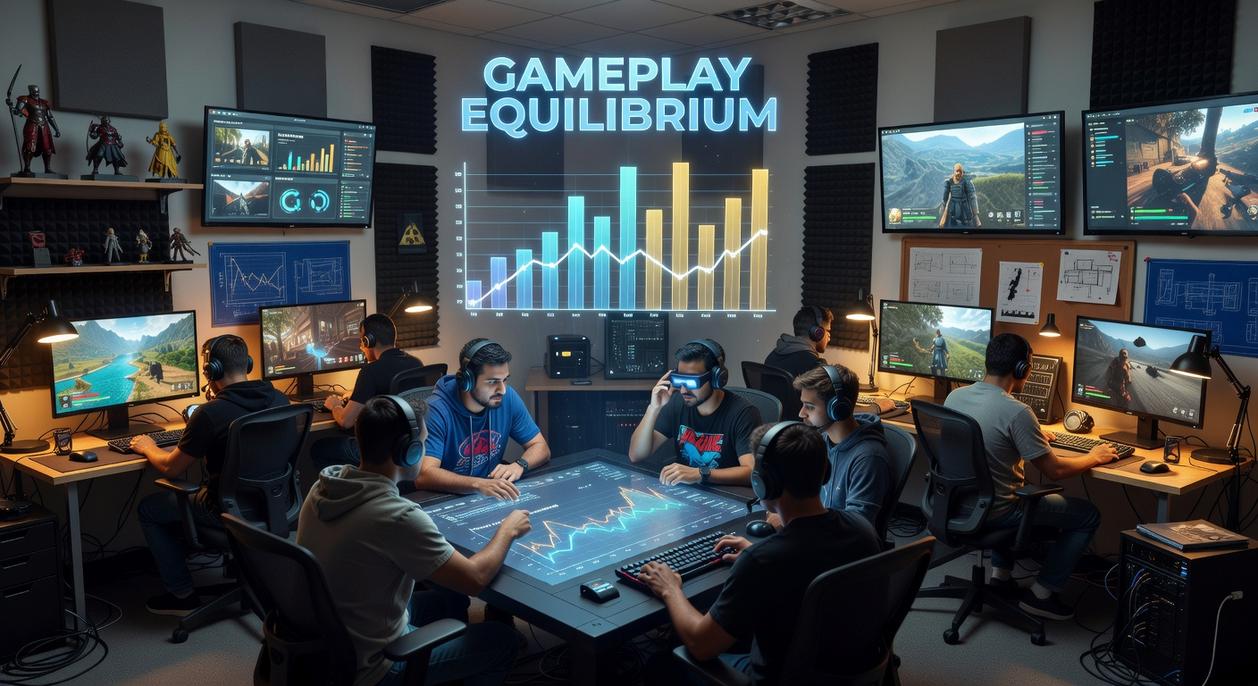
I still remember the first time I adjusted a weapon’s damage value by just 5% and watched the entire competitive ladder flip overnight. That’s the quiet power behind mechanical game balance.
Buffs & Nerfs: The Classic Levers
In simple terms, buffing means strengthening an underperforming element, while nerfing means weakening one that dominates. Sounds straightforward. Yet even a tiny tweak—like shaving 0.2 seconds off a cooldown—can shift the meta (the prevailing dominant strategies players gravitate toward). I’ve seen a minor attack-speed buff turn a “forgotten” character into a must-pick within days. Conversely, reducing damage output by 3% once stopped a single-weapon meta that felt straight out of a broken speedrun.
Some argue constant nerfs frustrate players who’ve mastered a build. Fair point. However, leaving overpowered tools untouched usually shrinks diversity, which hurts long-term engagement.
Cost-Benefit Analysis
Balancing isn’t just about numbers. It’s about trade-offs:
- High damage paired with long cooldowns
- Strong abilities that drain scarce resources
- Powerful moves that leave players exposed
In one prototype, we allowed a devastating ultimate ability—but rooted the player in place while casting. Risk created tension (and surprisingly, more fun). Pro tip: If everything feels safe, it’s probably overtuned.
Introducing New Mechanics
Adding new characters or systems is the ultimate test. Ideally, they counter dominant strategies without causing power creep—the gradual escalation of strength that makes older content obsolete. It’s a delicate dance, not unlike introducing a new superhero into the Avengers without making everyone else irrelevant.
Map & Environmental Design
Finally, level design itself balances playstyles. Long sightlines empower snipers. Tight corridors favor shotguns. When I redesigned a map to add vertical cover, airborne builds suddenly became viable. The arena, in many ways, is the invisible referee.
Symmetrical vs. Asymmetrical Design: Two Paths to Fairness
Symmetrical Balance Explained
Symmetrical design means both sides have identical or mirrored tools. In Chess, each player starts with the same pieces. In Street Fighter, competitors can even pick the same character. The result? Victory hinges on execution, timing, and decision-making—not advantages baked into the system. This is the purest form of mechanical game balance: fairness through equal access.
Some argue this is the only “true” competitive format. After all, if both players have the same options, skill decides the outcome. That’s hard to dispute. If you’re building or choosing a competitive experience, start with symmetry to establish a clear skill baseline. It’s clean, readable, and easier to tune.
The Challenge of Asymmetrical Balance
Now compare that to Dead by Daylight or StarCraft. Survivors and killers. Zerg and Protoss. Completely different abilities, objectives, and playstyles. Here, balance doesn’t mean fairness in a single match—it means roughly a 50% win rate across thousands (sometimes millions) of games (Source: GDC talks on live balance analytics).
If you’re interested in encounter design philosophy, studying dissecting boss fight design in modern action games reveals similar asymmetrical tensions.
Risk vs. Reward in Asymmetry
Asymmetry creates depth. One role may feel powerful but fragile; another durable but reactive. The magic happens when each side has the tools to win if mastered. My recommendation: embrace asymmetry when you want replayability and role identity—but commit to constant iteration.
Why Asymmetry Is Harder
Balancing asymmetrical systems demands relentless data analysis, large sample sizes, and frequent patches. Critics say it’s unstable—and they’re right. But when tuned well, it delivers unforgettable, high-variance moments (the esports crowd lives for this). If you’re designing multiplayer today, choose symmetry for clarity, asymmetry for longevity—and be ready to support it.
Data-driven developers rely on telemetry—win rates, pick rates, damage outputs—to spot trends before Reddit does. By tracking millions of matches, they identify hidden imbalances and fine-tune mechanical game balance with precision. Meanwhile, Public Test Servers act as live sandboxes, inviting dedicated players to stress-test bold changes before launch. However, community sentiment can clash with hard data; what feels overpowered may not statistically dominate. Therefore, studios blend feedback with metrics, ensuring updates serve long-term health, not just the loudest voices. Think Moneyball for multiplayer. The result is a smarter, steadier meta over time.
Your Next Move: Mastering Balanced Gameplay
I once queued into a ranked match convinced the system was rigged. Losing felt personal. But reviewing the replay showed smart tuning, not sabotage. That’s when I understood mechanical game balance is a living process. Developers track data, adjust variables, and refine design philosophy so skill decides outcomes. Some argue balance patches ruin mastery. I disagree. Continuous tweaks keep competition fair and evolving. Next match, look for subtle cooldown shifts or damage scaling. Spotting them sharpens strategy and appreciation. It might even hand you the edge in tight overtime battles. That awareness changes everything.
Level Up Your Competitive Edge
You came here to understand how evolving systems, smarter strategies, and sharper optimization can elevate your gameplay. Now you have a clearer picture of how meta shifts, player behavior, and mechanical game balance directly impact your performance and long-term success.
Falling behind the curve is frustrating. Watching opponents adapt faster, exploit balance changes, and dominate updated mechanics can make even skilled players feel stuck. The difference isn’t talent — it’s staying informed and adjusting before everyone else does.
The advantage goes to players who study the evolution of multiplayer systems, refine their builds with intention, and react quickly to patch-driven changes. When you understand how balance updates reshape the field, you stop reacting and start predicting.
Don’t let outdated strategies hold you back. Get the latest breakdowns, optimization insights, and competitive-ready guidance trusted by thousands of serious players. Dive into the newest updates now and start applying what you’ve learned today — because the next match rewards the prepared.